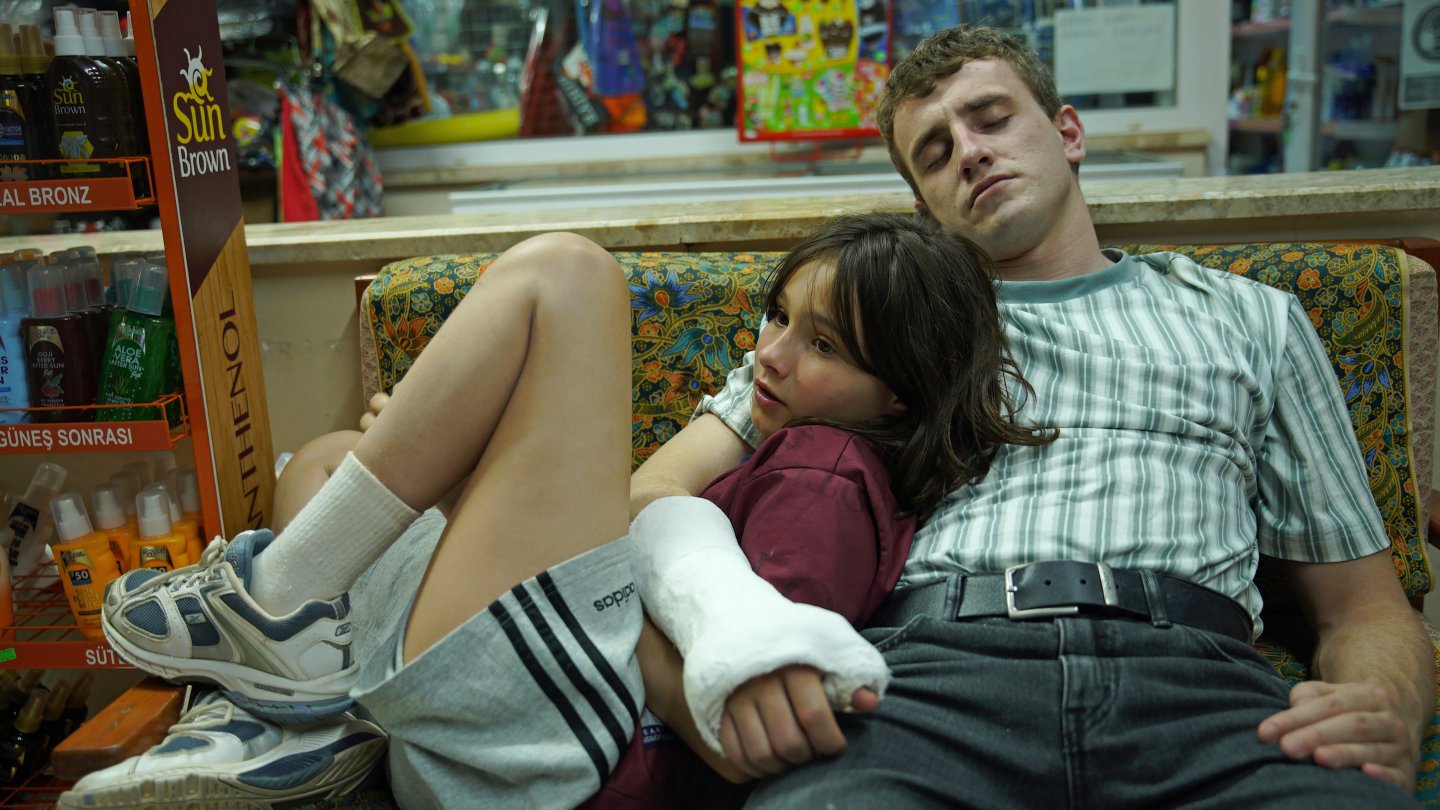
Aftersun (2022), the directorial debut of Scottish filmmaker Charlotte Wells, is one of those rare films that reaffirms the magical possibilities of cinema as an art form. The simple narrative structure is framed by a father and daughter who go on holiday together. The 30- year-old father Calum (played by Paul Mescal) has recently separated from the mother of his 11-year-old daughter Sophie (played by Frankie Corio) so the trip is fraught with an understated poignancy from the outset. Over several days their close relationship evolves to reveal Calum’s vulnerability and Sophie’s emotional maturity, as if Sophie’s adult avatar is already present alongside them. Indeed, at certain points the film contains momentary flashforwards to an adult Sophie (played by Celia Rowlson-Hall) dancing at a rave but unable to reach Calum in the crowd. The portrayal of time in Aftersun works on multiple levels from the “slow time” of waiting around that can mask deep undercurrents of longing or anxiety to the complexities of recorded memories in the form of photos or video (including Sophie’s enthusiastic recordings of the holiday). That their time together is so precious and fragile is underscored by the enormous significance of even minor misunderstandings along with Sophie’s ability to perceive an unspoken hinterland of adult sadness. In one of the final scenes, after they return from the holiday, Calum says goodbye to Sophie at the airport and then passes through an empty corridor, the closing of doors signalling an impossibility of return. A banal architectural space is weighted with an extraordinary affective and temporal intensity.